FOR RISK & TRAVEL MANAGERS
Protecting Your Business Travelers
When a trip gets derailed by a health problem, what gets your traveler back to the table fast isn’t luck — it’s whether the clinic treating them already knows their history, or has to start from zero. Right now, it starts from zero. And every hour lost to that isn’t just their hour — it’s the meeting that got pushed, the client who’s waiting, the sale that’s lost, the trip that’s now running behind.
THE PROBLEM
The Duty-of-Care Gap That Travels With Them
Ask your business travelers whether they could name every medication and supplement they’ve taken in the last year, their allergies, their blood type, and who to call in an emergency. Most couldn’t answer that from memory. Hundreds of miles from home, or in a country where the clinic doesn’t read English, looking it up isn’t simple either. It’s back home, scattered across every provider they’ve ever seen, in files that don’t travel with them and don’t talk to each other.
An empty medical file leads to severe corporate travel disruption, wasting hours chasing data while clients wait, meetings stall, and travel budgets go to waste. Business travel keeps demanding more of people, and the toll isn’t just being tired. Changing time zones disrupts sleep and appetite. Long stretches in a car or a middle seat add up. Every trip — a two-hour drive to a client site or a two-day flight across the world — pulls someone away from their usual doctor, their usual pharmacy, their usual routine.
Researchers who study business travel call this a real health issue, not bad luck. The data gap creates a critical business travel duty of care failure on regional or international trips alike, leaving your team far from their usual doctor, pharmacy, and routine.
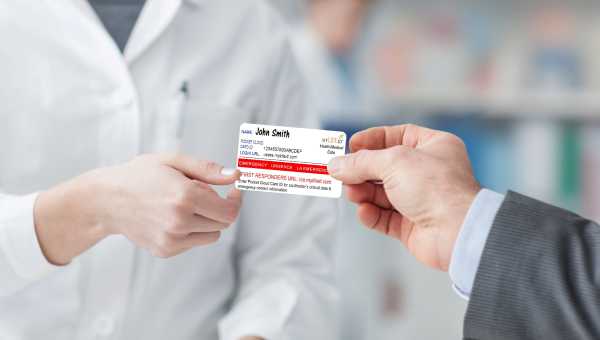
“A portable health baseline that fulfills your business travel duty of care obligations instantly.”
3.6x
As likely a heavy business traveler (20+ nights away a month) is to rate their own health fair or poor, vs. a light traveler (1–6 nights)
81%
Share of business travel logged by car, not plane — the toll shows up on regional trips too, not just long-haul flights
Being unwell away from home is its own problem. It doesn’t matter what’s actually making them sick. The clinic they end up in — across the state or across an ocean — doesn’t know anything about them. Vaccination history, allergies, current medications: it’s all out there somewhere, just not in front of whoever is treating them right now. When that turns into a real emergency, the bill climbs fast — evacuation, a hospital stay, a trip cut short.
$36-40K
Median cost of a single air-ambulance transport, when a business trip turns into a medical emergency
59%
Of travelers crossing a border who aren’t sure their health coverage still applies once they’ve left the country
None of this is really about geography. It’s about being away from the record-keeping that usually catches these things. The doctor who already knows about the allergy. The pharmacy that already has the refill on file. Take that away — on a regional trip or an international one — and small gaps turn into real risk.
IN THEIR WORDS
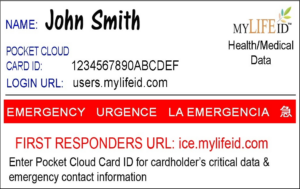
It’s day three of a trip to a city they’ve never worked in before and a clinic that’s never seen them. The pain in their side isn’t going away. The intake form wants medications, allergies, blood type — they know the names, maybe, not the details, and nobody here has a file to pull up. This is the moment MyLifeID exists for: their history travels with them, wherever business takes them — the departure gate, the client’s office, or an urgent care three time zones from home.
THE BORDER CASE
What Changes When the Trip Crosses a Border
An international trip raises the stakes further. Prevention has to start before departure — vaccines, the right prophylaxis, enough of a regular prescription to last the trip. Deploying comprehensive travel risk management solutions ensures these gaps are handled proactively before a traveler ever boards a plane. Once someone lands, the intake form may be in a language their clinic doesn’t share with them, and their file might as well not exist if nobody there can read it.
55%
International business travelers who skip a pretravel health consultation before departure.
92%
Of those heading into malaria-risk regions who took no preventive medication, or an incomplete course.
That preparation gap turns into a cost gap fast. Employees who travel internationally for work cost more to keep healthy than those who don’t. And the trips that go sideways tend to stay unresolved even after the traveler is home. A cough that lingers. A prescription that needs refilling in a system that’s never heard of them.
70%
Higher health-plan expenditures for international business travelers than for employees who don’t travel.
22-64%
International business travelers who return home with an unresolved health issue needing follow-up care.
This is where MyLifeID’s reach matters most — and it isn’t only a border problem. Think of the sales rep on a week-long swing through three states, the field engineer on a multi-day install two hours up the interstate, the technician or consultant living out of a hotel near a client site for most of a week. None of them left the country. All of them are just as far from their own doctor, their own pharmacy, their own routine as someone who did. A border adds a language barrier and a prevention timeline a same-country trip doesn’t have. Integrating verified profiles into your travel risk management solutions gives the regional trip the safety weight it deserves, since most business travel happens by car, not by plane.
Sources include: Chen LH, Leder K, Barbre KA, et al., “Business travel-associated illness: a GeoSentinel analysis,” Journal of Travel Medicine 25(1):tax097 (2018) . CDC Yellow Book, “The International Business Traveler” chapter (2024/2026 edition)
THE SOLUTION
What Your Business Travelers Get
INSIDE THEIR COMPREHENSIVE PATIENT PROFILE
When you add it to your travel program, business travelers get an account they’ll actually use before they ever leave for a trip. Private by design, it’s their profile, not yours to manage or secure. This active support seamlessly modernizes your business travel duty of care framework, providing a concrete, portable safety line directly to your people. Here’s what they get:
Automated record aggregation
Provider records, past and current, are gathered into one portable place, replacing fragmented data silos with minimal manual entry required..
Wearable data continuity
Connected fitness and wellness tracking streams directly into the same profile, capturing continuous daily metrics rather than just isolated doctor visits.
Intelligent data audit
Missing, incomplete, or conflicting records are flagged with built-in AI, catching hidden coverage gaps that a standard pre-trip checklist would otherwise miss.
Borderless access
Online and portable options ensure information is accessible anytime and anywhere, so a clinic overseas isn’t starting from zero.
Rapid provider transfer
Travelers can share complete information with a new doctor in minutes rather than weeks, delivering data in a form a clinic can actually use.
Secure emergency access.
First responders or loved ones back home can view critical records instantly, protecting your workforce if something happens far from home.
Integrated Digital Health Passport.
Local regional health risks and compliance data are built right into the profile, letting your team know before they go—wherever the trip takes them.
Complete operational protection.
All features compile into a unified Comprehensive Patient Profile, reducing care delays and costly corporate travel disruption to get your team back to the business table fast.
By bridging the critical infrastructure gap between standard corporate benefits and real-world clinical networks, MyLifeID ensures your travelers never have to navigate a medical crisis alone.
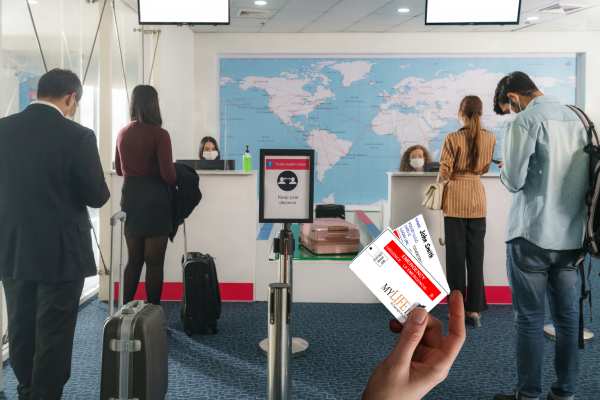
Instant access that bypasses care friction, stopping corporate travel disruption in its tracks.
THE SOLUTION
Proof, Not Promises
How MyLifeID Catches Gaps in Business Traveler Health Records
A blood type or allergy that never makes it into the record can turn a routine visit into a guessing game — the same problem whether the clinic is across the state or across an ocean. MyLifeID catches gaps like these before they turn into a medevac, or worse. It reaches health systems worldwide, in many languages.
7,600+
Health systems MyLifeID accepts data from, in multiple languages, so these gaps get caught wherever a trip takes your travelers, not just at home.
THE ANSWERS
Common Questions
Yes. MyLifeID works seamlessly with your duty-of-care program. It delivers the health and wellness data in the moment, at the point of care, or in advance with the medical history behind it. By providing an immediately accessible health baseline, it serves as a powerful anchor that strengthens your existing travel risk management solutions. Access to medical professionals can be granted in less than 60 seconds.
Travelers themselves. They connect and manage their own account, and can grant emergency access to a first responder or a loved one if something happens while they’re away. Your organization never sees an individual’s account — there’s nothing for your team to see, store, or secure.
No. There’s no claims process and no underwriting. MyLifeID isn’t insurance — it organizes the records behind someone’s care, so a clinic or an evacuation team has what they need to act fast.
THE ACTION
See what this looks like for your traveling workforce.
Bring your travel program, and we’ll walk through what adding MyLifeID looks like for the trips your people are already taking.
Prefer to talk now? Call 702-832-0112 ext. 101